

Hey, thanks for opening this one, and happy Christmas to you and yours…
At Christmas we often reflect on our creative practice, and can feel pressure to make goals for the new year based around outcomes and expectations. Well-meaning friends and family, can say things to us that might make us focus on measurable goals, or lose sight of the purpose we have for our work, which we’ve fought to define all year.
So as we sit in this gap before the new year, I wanted to offer over some ideas which can help us stay on the right path. And how, in a world obsessed with measurable outcomes, we can sit within a more deeply nourishing model, one which offers the space for truly transcendent creative work and experiences within our journey.
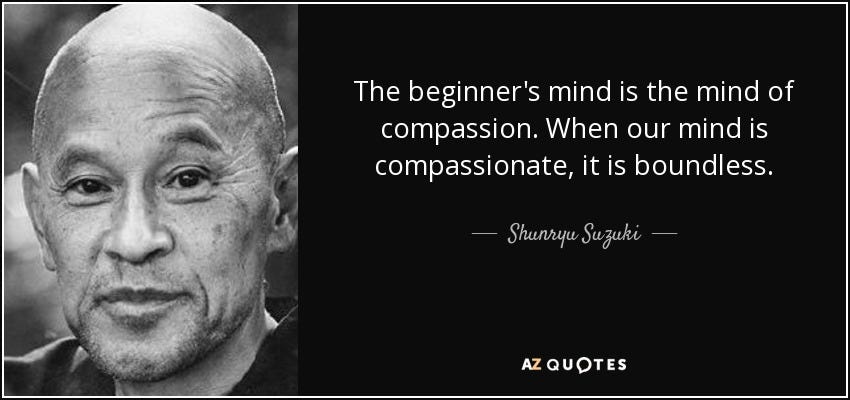
In the beginner’s mind there are many possibilities, but in the expert’s there are few. Shunryū Suzuki
The book I’ve been reading on this recently, is called Zen Mind, Begginer’s Mind - by Shunryū Suzuki (audiobook link | PDF link). This short text is an absolutely amazing intro to what Zen can offer creatives, in a model based on habitual practice, openness to discovery, and non-attachment to expectations.
I’m not the first person to recognise how the focus and approach offered in a Zen model, can overlay across the life of the artist and creative too, and in this newsletter and podcast, I want to hand over an introduction to this relationship for you.
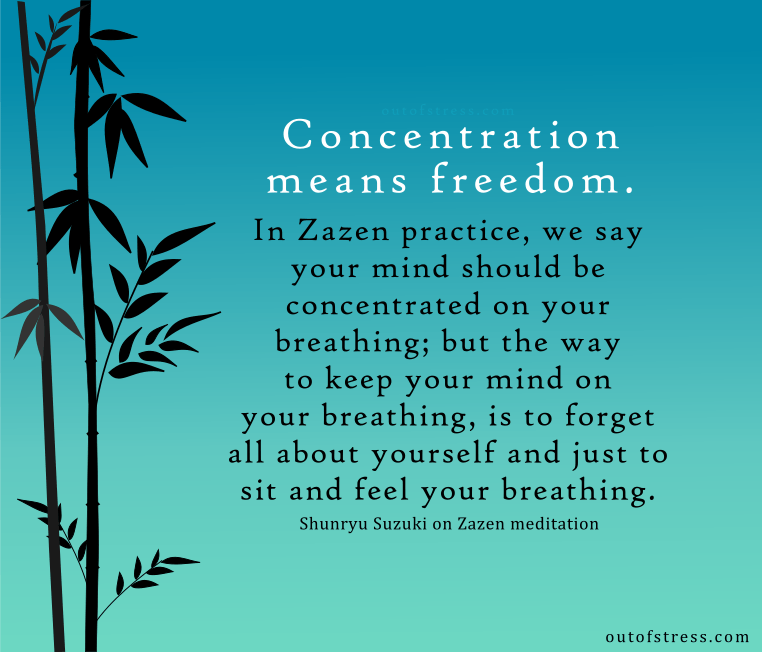
When people start to approach Zen meditation practice, they arrive on a cushion on the floor, and sit with a simple goal like developing a certain kind of awareness of the present, by watching their breath.
The simple focus and awareness of the present, is designed to open the door to a state of freedom and openness, and is based around focusing on the present moment, and letting go of attachments to any particular gain or future goals.
Here we are seeing the kinship to how we might want to build our own creative approach. When we create from this space then, we don’t try to force anything, but instead realise it’s natural for us to be focused and to create, if we can only approach and be with our practice in the right attitude (or perhaps even without any attitude at all).
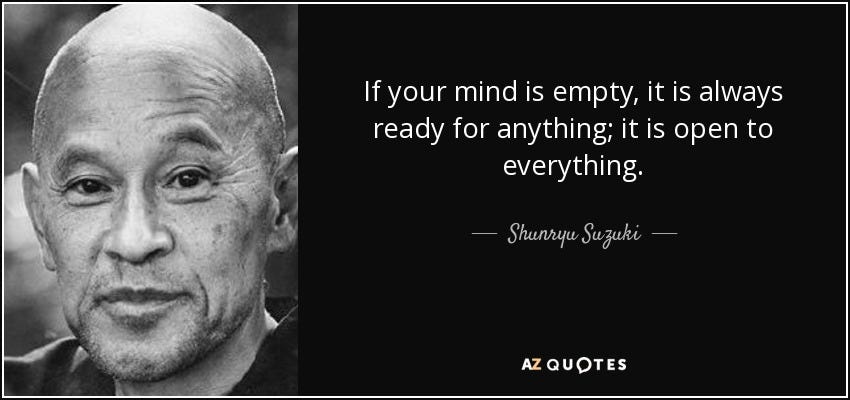
As artists and creatives, a lot of us will understand how this openness and lack of attachment to outcome or expectations or the thoughts of others, can nourish our best work.
If you sit at your instrument twice a month, and only practice when you are practicing for a concert, and only write when you are writing for a song deadline, then your mind will be attached to that goal, and there will be a pressure or boundary of direction towards achieving a certain thing, and a narrowing of the potential of your work.
A great goal for an artist will most likely be based around process and routine, as opposed to outcomes. If the same artist was to develop the practice of sitting at their instrument every day, without a specific goal, and focus only on playing the instrument in that moment, and for that moment, then the possibility of transcendent work will open up, and the potential of the work and the nature of the artist will be more fully realised.
This clear and open approach to creative practice is the goal, but that’s not to say it’s easy.
I have a busy mind sometimes, and I know the struggles. Sometimes I’ll wake up, and there will be other parts of my brain which are pushing me to apply more structure to things, to attach specific goals, or think about what others might think of the work while I’m doing it.
Again, if we want to create some kind of great project, great record or exhibition in 2026, we naturally might start to work back from a goal of releasing it. We might want to put time constraints on it, and start to think about distribution channels and what kind of opportunities might come from it.
It’s tempting and natural to drive a project using this energy of excitement - where it might take us, or how great and life-changing those experiences might be. But at the beginning of a project, we might need to throw away this fuel - because it’s a fuel based on outcomes, and these expectations and outcomes and thoughts of future judgment don’t actually exist.
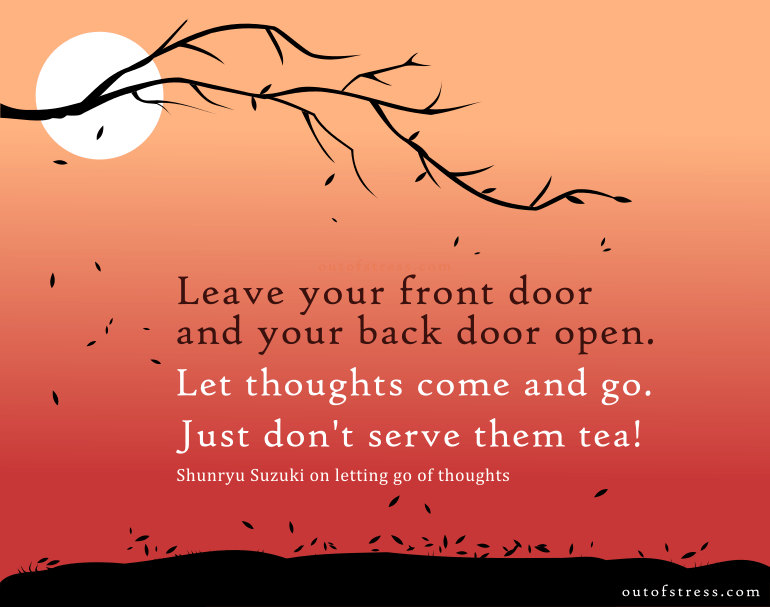
Zen teaches us that this noise around outcome is normal to have, and the cure isn’t to resist it in our minds, but to lean back into the present moment, and build focus and awareness inside our process itself. When we wake up, and have struggled to get a great sleep, and are distracted by thoughts of a work colleague who’s cross-cutting us, or feel stressed by a sense of an upcoming performance, or worries about someone judging us - this moment of fracture and doubt and frustration is the exact moment to go into our habitual creative practice, where we can find those more nourishing states of awareness.
Through the discipline of engaging in that practice, we’re not avoiding our other stresses, but instead, we trust that the act of practicing helps us enter a deeper state, where we are able to separate and right-size these other ongoing concerns. In fact, by separating our deepest humanity, nourishment and emotional self, from the work/life stress and responsibilities, we are able to approach the necessary tasks with better perspective, objectivity, and focus.
If we can tune in to the idea of making things and sharing them without being attached to the outcome, the work is more likely to arrive in its truest form.
Rick Rubin
The ideas in Zen Mind, Beginner’s Mind can also help us to hold our creative struggles like procrastination, overthinking, or perfectionism, in a more healthy way.
I recognise that a lot of the creatives and artists in this audience have struggled around the issues of perfectionism. This search for perfection is a search for good creative practice yes, but might also be the way the ego or smaller self, attempts to build a jacket which is so thick, so impenetrable, that we can feel entirely invulnerable inside it.
Zen teaches us about the wrongness of this search for perfection. The goal in Zen practice is not to perform perfectly. The goal is to keep practicing with a full heart, and to recognise that imperfection is often the state of things. This acceptance of imperfection, and focus on a habitual and open-hearted practice, can be massively relieving for the ambitious creative.
An upcoming performance for example, doesn’t have to be good or bad. Failures or successes don’t have to cause us to reflect with judgement, regret, or shame. We are never trying to be perfect. We are just trying to approach our practice with the correct, single-hearted and non-attached way.
When we are aware of our perfectionist tendencies, we can recognise how they actually help us realise our nature in the work, and make the work more of our own expression. And with that awareness, once the project is ready, we can simply recognise our doubts around perfectionism, and take the actions to release the project in an imperfect way anyway.
In short, this is all about awareness. Once we are aware of being a perfectionist, we aren’t a prisoner to it. And we can take all the positives from our perfectionist spirit, and decide to leave anything that isn’t serving us, on the table.
The approach angle of the Zen practice, also helps us think about our learning goals too. As younger people we might be taught to learn a skill through tests and grades, but when we are learning the skills we love and gravitate to as adults, it might be more nourishing to approach them without those structures or expectations.
Approaching our practice regularly, and trying to maintain a present and singular focus when we are in the practice, allows us to progress naturally, and take on the learning most deeply.
When we are painting in an aware and singularly focused way, we are achieving the complete act of painting in every moment. There is no state of lack within that process, no state of needing something greater or more perfect in the future. Within each moment of that practice, we find the state we are looking for. And with this awareness and focus, we progress in line with our nature, and are most nourished by the practice.
💙💙💙💙💙💙💙💙💙💙💙💙💙💙💙💙💙💙💙💙💙💙💙💙💙💙💙💙💙💙💙💙💙💙💙💙
OK, that’s probably quite a lot of info for now, but feel free to hop over to that podcast episode if you want to review the article here with additional sound bites.
Do check out the original text if you like (audiobook link | PDF link). And keep an eye out for the new series - The Mindful Creative, which will be starting here next week.
Happy new year, and peace peace peace,
Will
Can you help support this work? I believe Creative Minds is inherently more valuable if everyone can access everything for free. But I’m balancing building this and paying my bills, and need your help to keep growing this.
I get messages every week from people who say my work is helping them move forward with their projects and feel better about their journey and wellbeing around their creative life. If you can support here, and you think this kind of work matters, please consider dropping me that help, and be part of the engine that allows me to continue this…


