the cure to numbness
creative acts might be the only way we feel alive again


Hey, it’s Will - and thanks as always for being here.
I found Sydney through her writing on intentionality, and the importance of leaning into personal taste and discernment (in a world that wants your time and attention NOW). So I reached out to her, and asked if she’d write a piece for this audience, and she generously shared what sits below. Please grab a hot drink, drop a like to support the active community building here, and if the piece resonates with you - go join Sydney’s Substack, for the record®, and her community of 25k+ readers.
A lot of work went into this one, and I really hope you enjoy it,
Enter Sydney
the cure to numbness
creative acts might be the only way we feel alive again
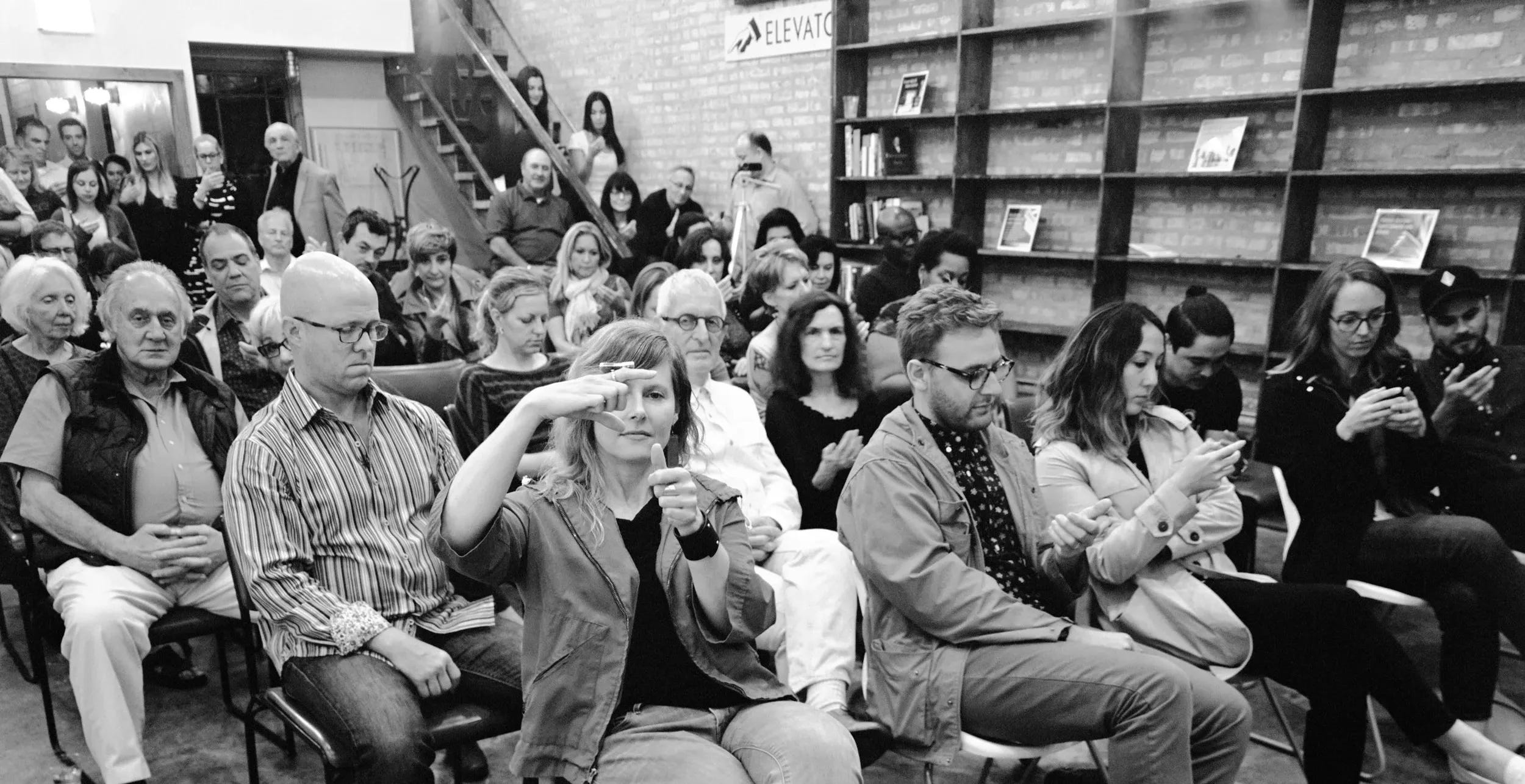
There’s a particular kind of tiredness that comes from passive consumption.
You know it well.
The podcasts on the commute to work. Social media during coffee breaks. The mindless swapping between apps while standing in a queue. And after a long day, when you feel completely drained, all you want is to be entertained by something that asks absolutely nothing of you. Someone else’s life. Someone else’s thoughts. Someone else’s outfit, trip, routine, relationship, kitchen, body, morning, success.
There’s nothing wrong with engaging with beautiful things.
I love searching for inspiration. I love learning. I love watching someone make something thoughtful.
But in the way we consume social media, inspiration can turn into comparison. Comparison turns to paralysis. Paralysis starts to feel like a personality trait.
It’s a strange thing, living in a time where we have access to more ideas than ever, but somehow feel less connected to our own. I envy the creative who existed pre social media. There was a different kind of privacy in the process. Creatives could experiment, fail, be rejected, iterate, and slowly build their craft in a bubble. One that was less watched, and probably more forgiving. More kind.
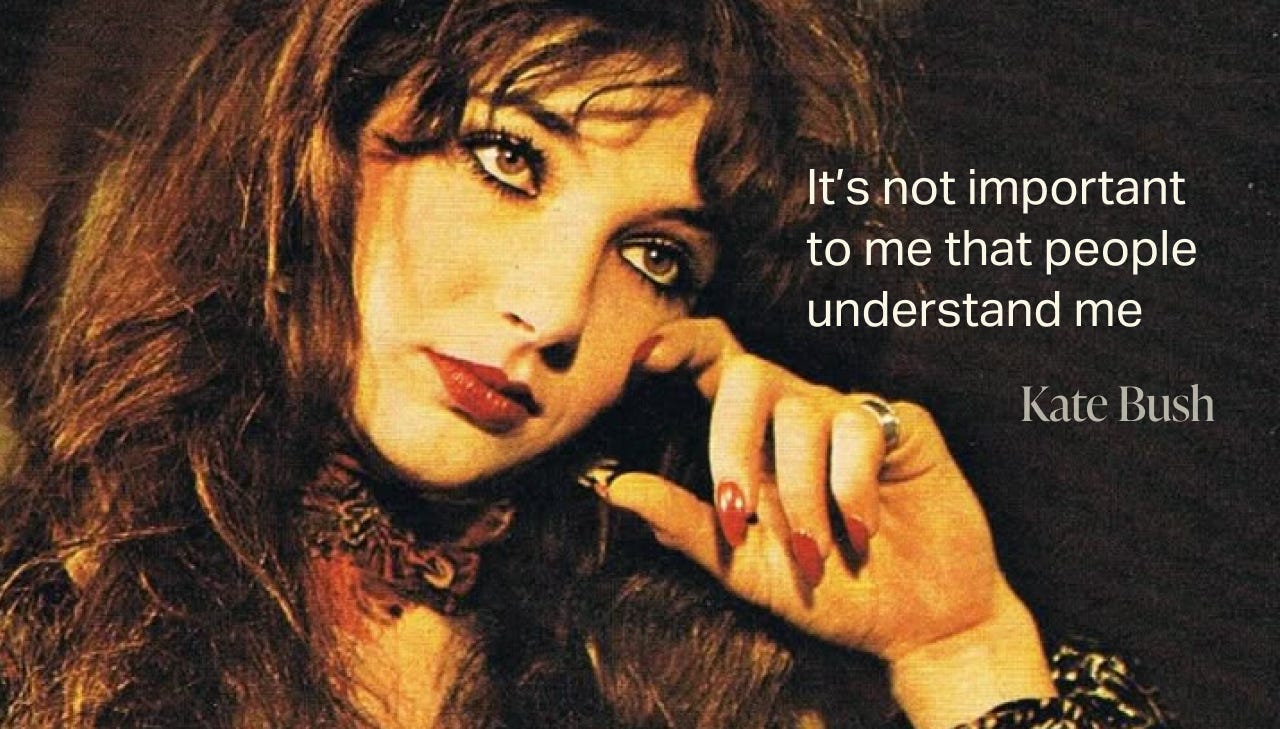
Kate Bush started writing songs at around 11, and some of the songs on her debut album were written when she was as young as 13. Her early demos were rejected before Pink Floyd’s David Gilmour heard them, recognised something unusual, and helped finance a more professional demo. She was signed to EMI, but they wanted a safer, more rock-oriented track as her debut single. Kate trusted her intuition and pushed for “Wuthering Heights” - a strange, literary, theatrical song based on Emily Brontë’s novel. It became a UK number one.
Her “strangeness” had time to form before it was publicly judged. She could be theatrical, obsessive, literary, dramatic, and slightly “too much” in her bedroom, the studio, dance classes, and demo tapes before the world had a comment section. By the time she was famous, she had already built a private inner language strong enough to resist what the industry thought she should release. She had a runway to build creative self-trust.
Now, if you start building something online, you get feedback immediately.
It’s encouraging and it often opens doors. But can also make you overly aware of yourself before the work has had a chance to become anything.
We swapped the love for making with measuring. Was it liked or shared? We enter internal spirals of: was it cringe? Was it even worth saying? And I wonder if this is part of why so many people have decided, consciously or not, to passively engage with the world. It’s so much easier to critique than create. We desire a life, but forget to participate in the making of it. But creating requires something FROM you…effort, imperfection, and willingness to be seen trying. And that can feel very vulnerable.
borrowed identity
In a culture optimized for passive consumption, acting on your creativity is no longer just a hobby. It’s a necessity for a grounded self.
What do I mean by that?
Today, without you actively creating, identity becomes comparative, unstable, and externally defined. When you are always observing other people’s lives, your sense of self starts to form in relation to them. Their pace becomes the measure of your own timeline.
This is comparative identity.
Somewhere along the way, you stop asking what feels true to you. Your attention becomes so occupied with other people’s lives that your own voice grows faint. And that is a very exhausting way to live.
There will always be someone more “ahead”. The algorithm will make sure of it. But when you create, something interesting happens;
You move from watching life to authoring it.
You return to your own hands.
And even if the thing you make, the path you take, is messy or unfinished or only seen by you, it becomes evidence. Proof that you are here, that you can act. Proof that you are not only being shaped by the world, but shaping something back. Proof of your vibrant aliveness.
meaning is made
I recently read Viktor Frankl’s book Man’s Search for Meaning - I love how he explains that meaning is not something we simply find, as if it’s hidden under a rock somewhere waiting for us.
Meaning is created through action.
That really stayed with me because I think a lot of us are waiting for meaning before we commit. We think: I’ll write when I feel inspired. I’ll start when I know exactly what I’m doing. I’ll make art when I feel like an artist. I’ll document my life when it feels more interesting. I’ll become creative when I have something valuable to say.
But, meaning is a byproduct of commitment, not a prerequisite for it. You don’t wait to feel creative. You create, and slowly remember that you are.
If you’re thinking “but, I’m not creative” let this be your reminder;
Creativity is a way of being present. A way of noticing and listening. We were made to make. The real question is, where did I stop trusting my impulse to make? (For me, it was doomscrolling. Watching myself scroll past my own life. It drained my energy and fed my inner critic. So I’ve had to design my life around slower, deeper, more intentional forms of media consumption. That’s a story for another day.)
Whatever act of creation you choose, the only question to ask is; does it bring you back into participation with your own life? If the answer is yes, you’re on the right track. In this sense, to create is about making contact - with the world, with other people, with the parts of yourself that show up when you are paying close enough attention… and ultimately acting on those nudges.
build a doorway back to yourself.
Creative acts can build confidence and a grounded self. You mold the work, and the work molds you.This is why a creative practice can stabilize identity.
You begin to gather evidence from your own life. Your attempts and creations all become an archive. You are a museum of everything you have ever loved.
Invest in your inner museum. Keep building and uncovering, even when it feels ruthlessly vulnerable. Intentionally create that space for yourself where you can explore the side of yourself that feels “too much”. Your museum is powerful because, over time, it uncovers the through-line of your life.
There is something deeply grounding about looking back at what you’ve made and realizing:
Oh. This is what I care about. This is what I keep noticing. This is the language I return to. This is the kind of beauty I’m always chasing.
The observer and the author live very different lives:
The observer scrolls, compares, consumes, waits. The author creates, decides, iterates, participates.The observer asks, what are other people doing? The author asks, what am I building? The observer feels fragmented. The author becomes coherent.
(And of course, we all move between both)
The strange thing about constant stimulation is that it promises to wake us up, but often leaves us feeling more detached. You feel numb, so you reach for stimulation. The stimulation overloads you, so you feel more numb. Then you reach for more.
It becomes a loop.
It’s time to build a doorway back to yourself.
the cure
Creating is the cure to numbness.
The act of creating is no longer just a nice-to-have. It might actually be the only way we come back to ourselves. When identity feels unstable, making something gives it shape. When life feels meaningless, making something asks you to participate. When you feel numb, making something reminds you that you are alive.
So this is your invite to make something.
Write, edit, paint, cook, plan, walk, dance, share. Make dinner feel like an occasion. Make a scrapbook. Make your room feel like a place you want to return to. Make plans with your friends.
We may not have the same world that Kate Bush had, but we can build something equivalent. A deliberate inner life. A practice that happens before, and beyond the audience. Yes, it requires courage and willingness, and yes, it’s vulnerable - and that’s precisely why it matters.
I hope that this helps you to decide that your attention is precious.
That your life is worth participating in.
That your inner world deserves somewhere to go.
Through the act of making, we stop distracting ourselves, and start creating ourselves again.
𖣠 sydney

Thank you to Will for having me here. If you enjoyed this piece, I’d love to invite you over to my publication, for the record®. If you’re craving depth, beauty, and thoughtful ways to connect with yourself and the world, I think you’ll feel at home there. 💌
About the author: Sydney Rheeder is a designer, writer and youtuber from South Africa. She shares creative rituals & journaling frameworks to help you document your life and return to what feels true.
you might also enjoy—

 | A guest post by
|
this actually made me cry. i have been an observer to my life rather than a participant, this substack awake something in me 🤍
A lot of great points hit me here! I too envy the creative before social media. What a time to be weird.