Stop Normalising Shame | Diaries of a Working Creative

I was talking to my dad the other day who’s 72. And he was saying that -
‘The great thing about getting older, is that you realise it’s OK to speak less, and listen more.’
This shift in perspective—from the self as the focus towards others and a shared reality—is something I’m trying to move through myself at the moment too.
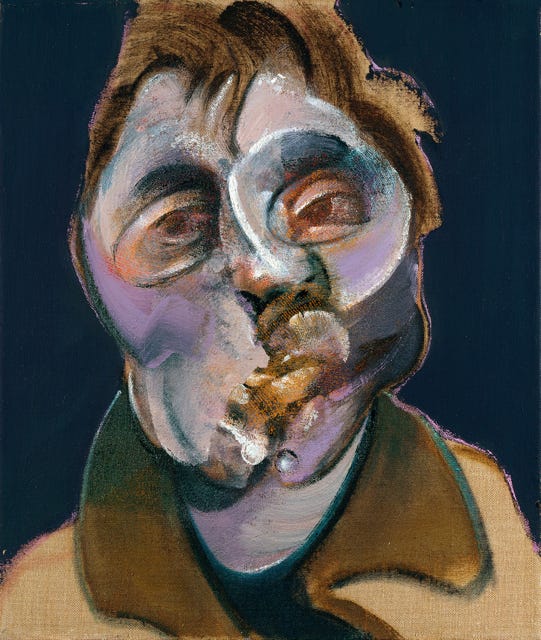
Maybe I’m too far away now to accurately depict it. But if I could draw a diagram of where my thinking was in my 20s, the nucleus of that consciousness would’ve sat directly behind my eyes, and the focus of that thinking would’ve been trapped within that limited, singular perspective.
Recently I’ve been realising how necessary it is to escape the controlling narratives of that “I”-focused perspective, and to become more interested in the chasms of difference between my own experience and others
This isn’t some kind of virtue signalling ethical argument either. It’s an escape valve - offering a chance of relief from the overbearing state which constant ‘I’ness wishes to bring.
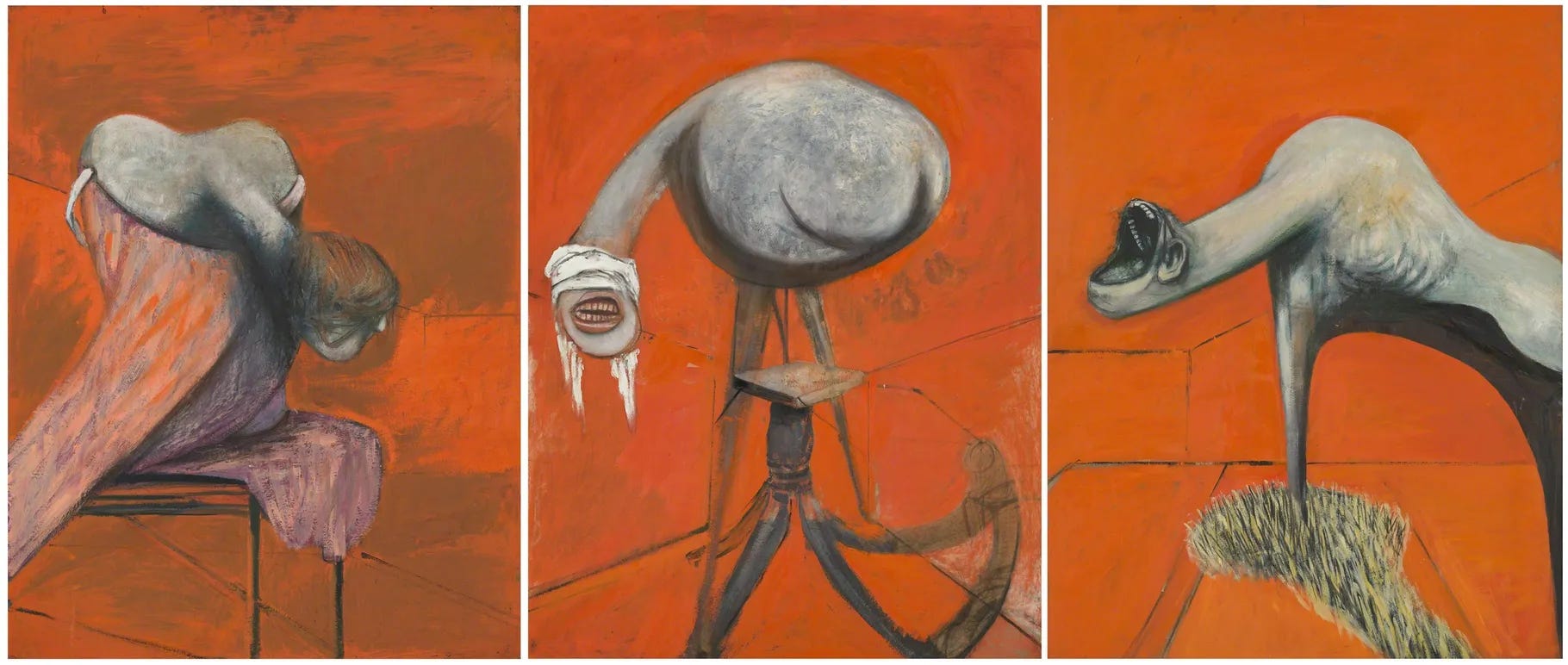
The practices that help me stay on-board with this widening sense of reality, are based in mindfulness and meditation.
In meditation we recognise the limits of the egoic, storytelling self, that sits inside our heads. We learn to listen to it, as opposed to react, and become less interested in what it’s telling us, and more interested in why…
If there was a single word that could net together all the thoughts that come up for me in meditation, a single emotional tone which underlies all this internal noise, honestly, that word would be shame.
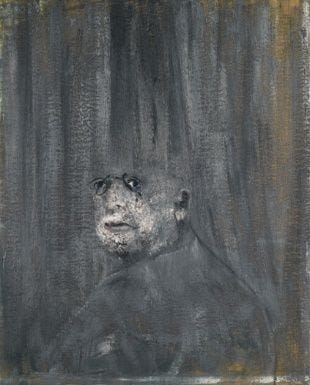
Whether it’s simple logistical things that I need to do, and feel threatened if I don’t, or the deeper identity attacks, the controlling narratives all seem to hide within those shame based shadows.
I think it’s quite obvious where a lot of this shame comes from too. As human beings are formed, it’s necessary for this disparate set of individuals to be socialised into groups and settings where the expressions and needs of said persons are brought into line with the group requirements.
School classes, birthday parties, and the more complex group dynamics we face as adults - shame is the way we are taught, then teach ourselves, to be normal enough to survive and exist socially.
But as I move into the next stage of my life, I’m trying to realise that perhaps I don’t have to carry these relatively extreme, protective, shame-based narratives in my head all the time - and can try to reparent myself towards a method based in greater trust, and more compassion.

I heard a story about a tribe called the Bemba tribe in Zambia, which might help us consider the reparenting we’re looking for here. When a member of the Bemba tribe does something inconsiderate or irresponsible, instead of being abandoned or punished, the other members form a circle around that individual, and praise them for two days - reminding them of all the things that are lovable and helpful and beautiful about them.
Here we recognise the more nourishing framework we might want to build within our own heads. And identify two things that might stand in for the opposite of shame here - a sense of belonging, and a surrounding circle of unconditional love.

How’s all this feel to you?
As artists and creatives, these internal mechanisms are so important. And these engines behind our thinking can shape not only the wider risks we might take on our journey, but the decisions we make in our work at the sentence, or brush stroke level.
Where a conscious mind constructed around shame will constantly try to control what hits the page. We need that quiet basis of unconditional love - to open up the city gates, and allow the expression to flow-out freely.
Hemingway famously said: write drunk, edit sober. But for the more holistically minded artist, we might work to release the controlling barriers of our frontal cortex through self-compassion and a sense of deep belonging first.

This Creative Minds community have aligned recently with the work I’ve done around Zen, including reference to Rick Rubin’s approach to creative practice. And if there’s a single sentence we could write about this kind of approach, it might be that it centres -
a practice based in love, and the natural productivity of the mindful, loving human being, as opposed to one based in shame, and the self-flagellating activities of the never-good-enough approach.
For me, this is honestly a question of quality and experience. And as a committed artist, who also doesn’t wish to spend his entire life pushing others away in search for better work - the road I’m trying to walk becomes simple.
Peace ✌️
Will
Hey, I’m experimenting with these journal pieces around my creative work. I want to keep a record and track of some of the process and some of how I’m trying to keep more mindful with things. If you got this far, thanks for being here. And power to your own work too.
Thisal Indrachapa Samarasinghe
Southern Province, Sri Lanka
Email: thisalindrachapa3@gmail.com
To the Esteemed Supportive Organization, Association, or Institute,
Subject: A Formal Request for Comprehensive Support, Compassionate Guidance, and Professional Direction During a Critical Mental-Health and Immigration Transition
My name is Thisal Indrachapa Samarasinghe, and I am writing to you not only as a 26-year-old young man from Sri Lanka, but as someone who is trying, with all the strength I have left, to move forward despite profound emotional, psychological, and social challenges. I reach out to your respected organization with deep humility and hope, seeking guidance during a period that has been one of the most difficult and transformative chapters of my life.
I have been diagnosed with Asperger Syndrome (Autism Spectrum Disorder), as well as severe anxiety disorder, major depressive disorder, and obsessive-compulsive disorder (OCD). These are not simply medical labels—they are the lens through which I experience every second of my life. They shape my perception, my fears, my interactions, and my entire emotional world.
---
My Daily Reality Living With Neurodiversity and Mental Illness
For many years, my life has been defined by internal battles that others cannot see. On the outside, I may appear calm or functioning, but internally, I often feel overwhelmed by:
constant anxiety that makes simple tasks feel frightening,
obsessive thoughts that steal my peace and clarity,
depressive episodes that make daily life feel unbearably heavy,
sensory overload that makes ordinary environments overwhelming,
social confusion that leaves me feeling isolated even when surrounded by people.
Every day is a combination of managing symptoms, trying to regulate emotions, and attempting to live a life that society expects—while quietly struggling not to collapse under the weight of it all.
There are moments where even getting out of bed feels like a tremendous challenge. Moments where the world feels too loud, too fast, too demanding. Moments where I feel trapped inside my own mind—desperately wanting peace, stability, and understanding.
My Academic Journey and Efforts to Build a Future
Despite these challenges, I have tried to move forward. I have completed:
Three diplomas,
Two professional certificates,
in the fields of Computer Science and Human Resource Management.
This required an enormous amount of emotional effort, concentration, and perseverance. For me, education has been one of the few areas where I found a sense of structure and purpose. It gave me a reason to keep going, even on days when my mental health felt unbearable.
Every certificate I earned represents not just academic achievement, but a victory over the overwhelming obstacles in my mind.
Family Support and Our Decision to Migrate
I am fortunate to have parents who have stood by me through the darkest times.
My mother is a doctor, and my father is a senior lawyer—yet even with their knowledge, experience, and support, my conditions have continued to be extremely challenging and difficult to manage within the environment we live in.
After years of struggle, medical consultations, emotional breakdowns, and deep discussion, my family has made the life-changing decision to immigrate to a European country. This decision is motivated by the hope of finding:
better mental-health care,
greater understanding of neurodiversity,
structured support systems,
social environments suited for individuals with ASD,
and long-term stability for my well-being.
This is not simply an attempt to move to another country.
It is a search for survival.
A search for healing.
A search for a place where I can finally begin to build a life that is not controlled by fear and emotional suffering.
Why I Am Reaching Out to Your Organization
For someone like me, the transition of immigrating is extremely overwhelming. I struggle with:
the emotional intensity of change,
unfamiliar environments,
adjusting to new social expectations,
legal processes that feel confusing and intimidating,
sensory overload from travel, crowds, and new surroundings,
fear of rejection or misunderstanding in new communities.
I know, with absolute honesty, that I cannot navigate this journey alone.
Because of this, I am reaching out to your organization, hoping that you may be able to assist me in one or more of the following ways:
1. Emotional and psychosocial support
Guidance from professionals or support groups who understand the unique challenges faced by individuals with ASD and severe mental-health conditions.
2. Advice related to mental-health support in European countries
Information about mental-health services, autism support networks, community programs, therapists, or specialists in the regions we plan to migrate to.
3. Recommendations for integration support
Advice on how someone with my conditions can adapt to new cultural environments, social expectations, and systems.
4. Connections to mental-health organizations, disability support groups, or advocacy networks
Any connection, recommendation, or referral would be deeply appreciated.
5. Suggestions for long-term stability and structured routines
I require environments that are predictable, calm, supportive, and structured—your expertise could help me build such a foundation.
The Emotional Truth Behind My Request
There are days when the emotional burden feels impossible to carry.
Days when the depression is suffocating, the anxiety crippling, and the OCD overwhelming.
Days when I feel like I am drifting away from the world—too different, too sensitive, too lost.
Yet, I continue to fight.
I continue to hope.
I continue to believe that with the right environment and support, I can build a future where I am not defined solely by my struggles, but by my resilience.
I want to live a life where:
my mind feels calmer,
my emotions feel manageable,
my environment feels safe,
and my existence feels meaningful.
Your organization represents a light of hope—a possibility for guidance, stability, and understanding during a time when my life feels fragile and uncertain.
Contact Information (Family Secretaries)
If you need further communication or verification, you may contact the secretaries working with my parents at:
071-4500638 (Mother)
071-8062310 (Father)
070-7537305
077-7867961
077-1683380
Closing Words
Thank you for taking the time to read this deeply personal letter. Writing these words has been emotionally difficult, but necessary. I am reaching out not from a place of weakness, but from a place of profound courage—hoping to find support, guidance, and understanding from people and organizations who truly care about individuals facing mental-health challenges.
I am ready to accept help.
I am ready to learn.
I am ready to fight for my future—
I just need the right support system beside me.
With deep respect, humility, and sincere gratitude,
Thisal Indrachapa Samarasinghe.
Now I'm living with under supervision specialist and councilor.
This was so incredibly helpful!